
Competition, precarity, and academic work
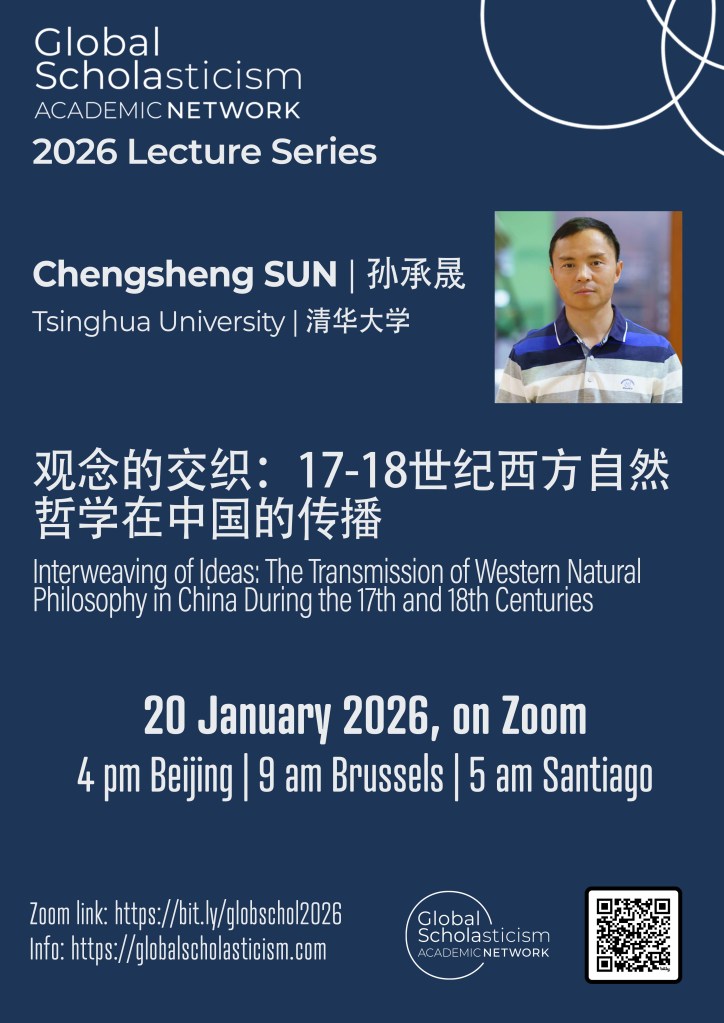












4 pm (Brussels) | 10 am (Santiago del Chile)
Francisco Castilla Urbano, La revisión gnoseológica del escolasticismo por el jesuita José de Acosta
Álvaro Ojalvo, La circulación del cuerpo masculino hispano e indígena entre los saberes médicos, teológicos y jurídicos (España y América, siglos XVI y XVII)
Roberto Marconi, Libertad académica y tradición en filosofía: Miguel de Viñas S.J., filósofo en Chile del siglo XVIII


Thierry Meynard, ‘For them, all is made of matter or Qi!’ Introducing Aristotle Against Chinese Materialistic Monism
Anna Strob, An Investigation Into the Material Composition of the World: Alfonso Vagnone’s Kongji gezhi 空際格致 (c. 1633)
Roberto Pich, On the Conditions of Possibility of World Experience: Accounts on Prime Matter, Form, and the Principles of Change by three South American masters of arts
chaired by Mário Carvalho

Han Thomas Adriaenssen, Pomponazzi on Matter, Quantity and Rarefaction
Dominik Perler, Real Stuff: Suárez on Prime Matter
Silvia Manzo, Francis Bacon on Matter
chaired by Robert Pasnau
Aurélien Robert, John Wyclif on Prime Matter
Salvatore Carannante, ‘The Common Mother of Every Generated Thing’: Leone Ebreo’s Doctrine of Prime Matter
chaired by Gabriele Galluzzo
Later medieval philosophers would claim that all bodies are compounds of matter and form. Yet, among themselves, their ways of conceiving of the two components tended to differ substantively. The conference “Late Medieval Hylomorphism” aims at disentangling the specificities of a long-lasting debate on hylomorphism, the scope and originality of which is still unknown. While hylomorphic issues in the late thirteenth and early fourteenth century have received some scholarly attention, the later history of Scholastic hylomorphism is still to be explored.
What were the main disputes concerning hylomorphism in the period? What were the main positions? Who were the interesting thinkers defending unusual points of view? These questions unfold at different levels of the ontological examination of substances. For instance, the debate about the modality of existence of prime matter conceived of as either a pure potency or an entity in act had profound impact on the later tradition up to the seventeenth century. In a similar manner, the contentious thirteenth- and fourteenth-century question of whether there is a plurality of substantial forms in any compound is present into the early modern period; but were new positions, arguments, and ideas develop over the course of the centuries? Moreover, an important view in thirteenth-century hylomorphic debates was the so-called theory of “universal hylomorphism”, which seems to disappear from the later debate; but is this in fact the case? A like question can be asked about the Augustinian notion of seminal reasons (rationes seminales).

Additional central questions about the later medieval debate on hylomorphism ask about the ontological distinction between super- and sublunary matters, and the roles played by prime matter and substantial form in the process of substantial change. And underlying all these issues, thinkers had to address the lurking worry that no well-grounded reasoning on matter and form is possible when neither of the hylomorphic constituents can be known.
Our conference aims to bring together scholars working on hylomorphism especially between the early fourteenth and the early seventeenth century. We encourage submissions on any aspect of hylomorphism in the period.
Silvia Donati, 13th-Century Discussions on the Ontological Status of Matter and Accidents (Commentaries on the Physics ca. 1240-1300)
Russell Friedman, Making Sense of Aquinas: Peter Auriol on Prime Matter, Pure Potency, and Existence
Cecilia Trifogli, Thomas Wylton on Matter and Quantity
chaired by William Duba
Neil Lewis, Kilwardby, Rufus and Grosseteste on the Infinite Replication of Prime Matter
Jeffrey Brower, Prime Matter as Pure Potentiality in Aquinas
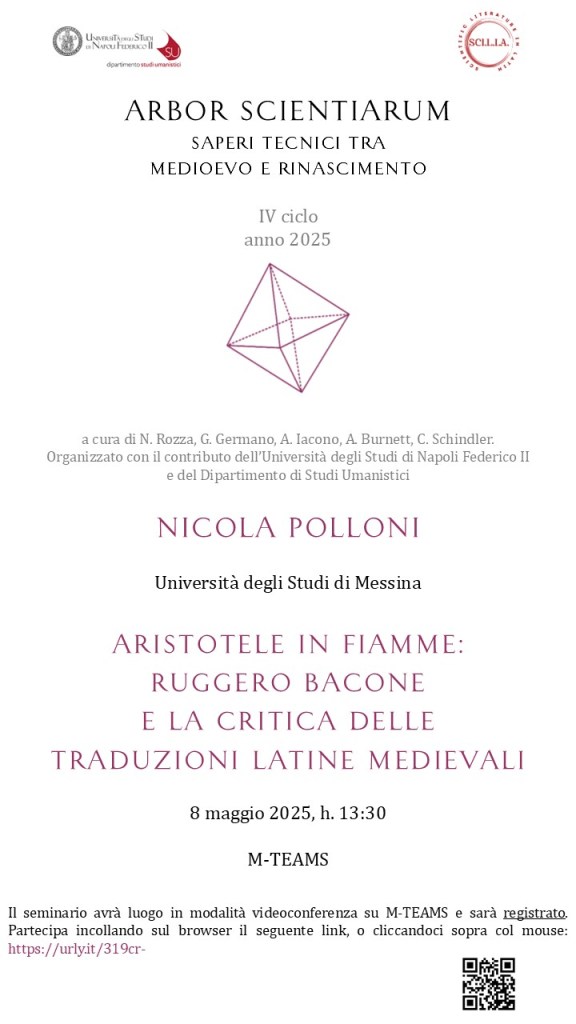
Nicola Polloni, Unmitigated Hylomorphism: Roger Bacon on Matters, Potencies, and Change
chaired by Rega Wood
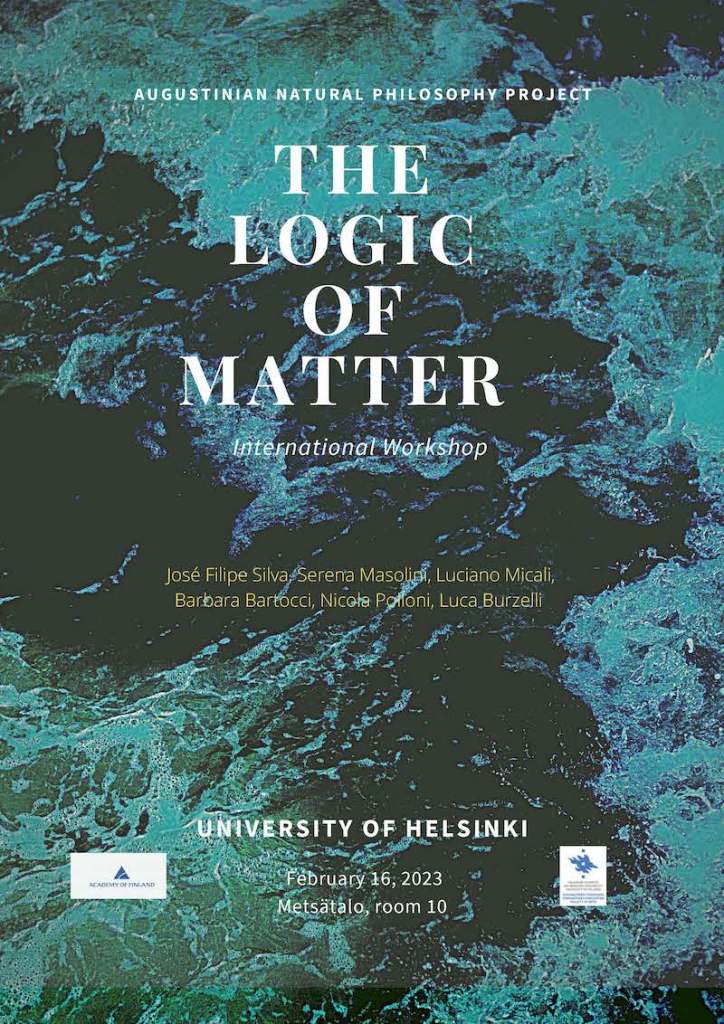
It took more than a year to organise. And it will take more than one year to be completed. It starts with Julius Cesar and ends with Yongzheng, more than eight thousand kilometres away and seventeen centuries later. And it is all about matter!!
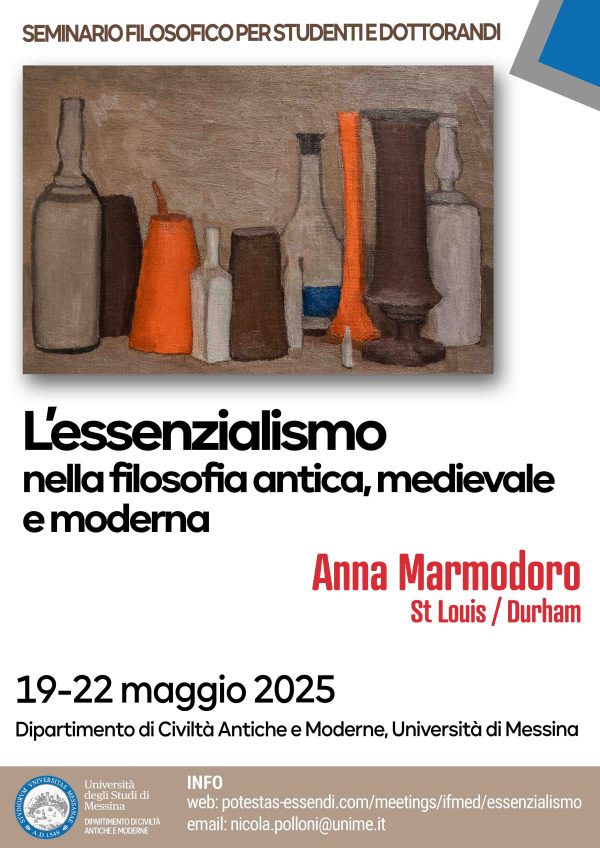
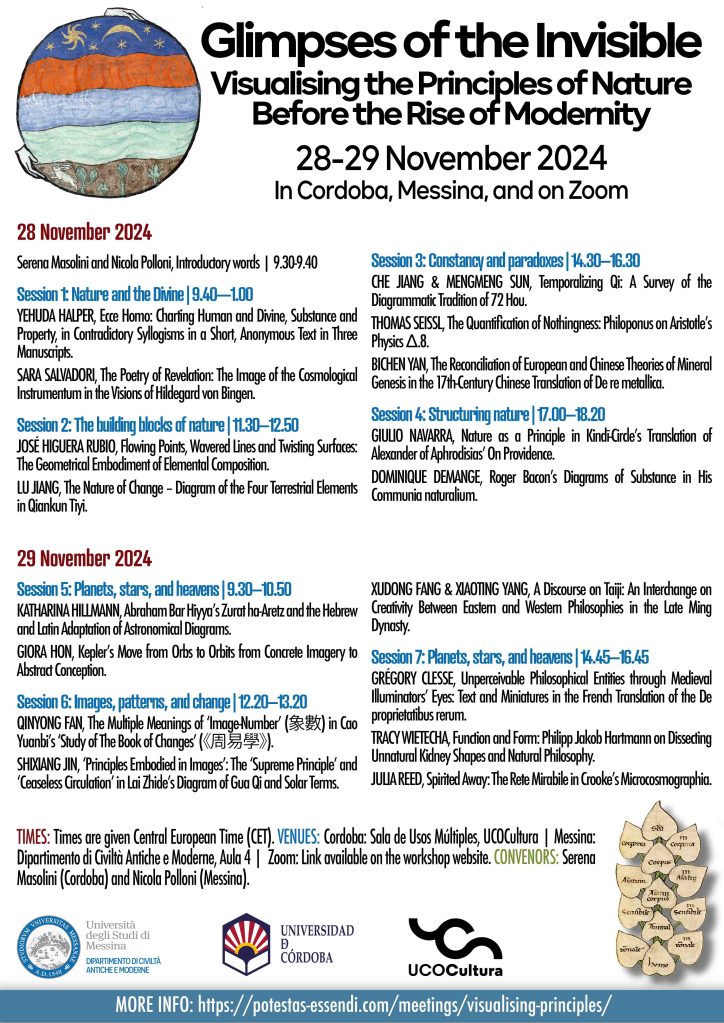
Here’s the poster of The Elusive Substrate: Prime Matter and Hylomorphism from Ancient Rome to Early Qing China. It’s going to be quite a journey, historically and philosophically.

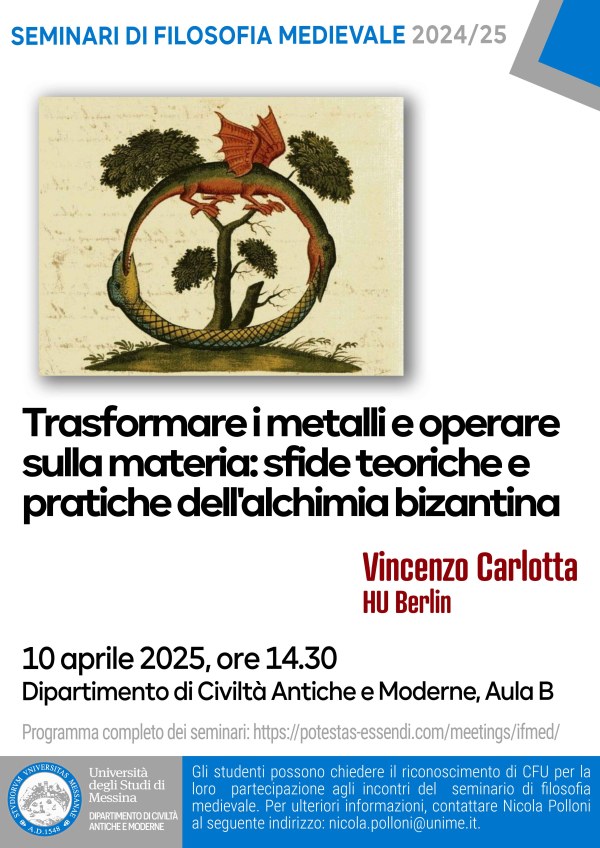
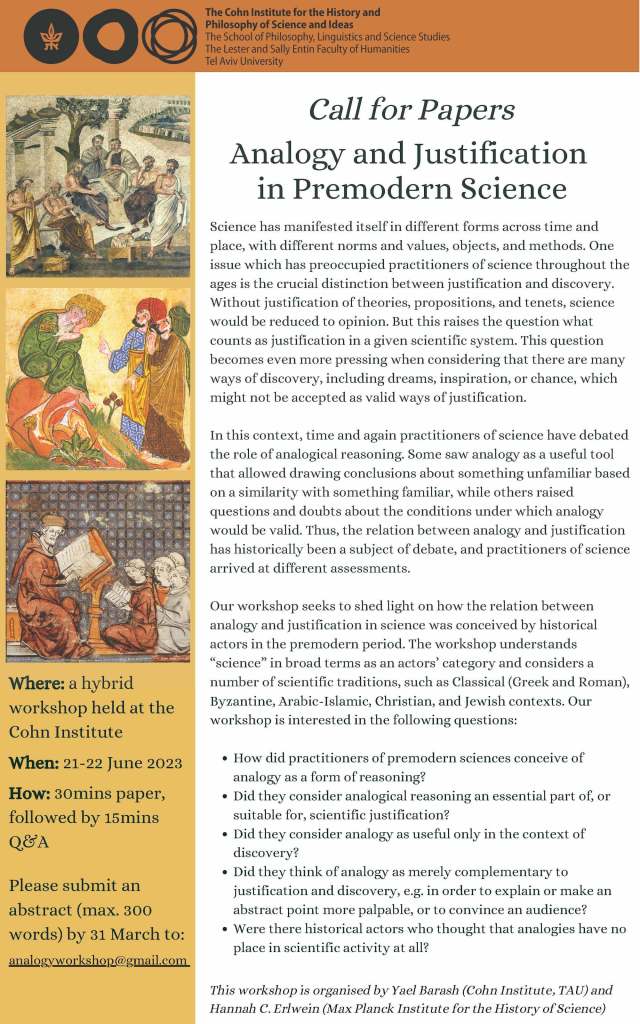
Organised by Vincenzo Carlotta and Katja Krause, an intriguing workshop on “Alchemy between Practices and Theories” is about to take place at the MPIWG – Berlin. Lots of fun ahead!

Another gorgeous exhibit by Sienese artist Andrea Fagioli (you can find more about his here). This time is about… time! If you have any chance to visit the exhibit in Siena, don’t miss it!
Continue reading
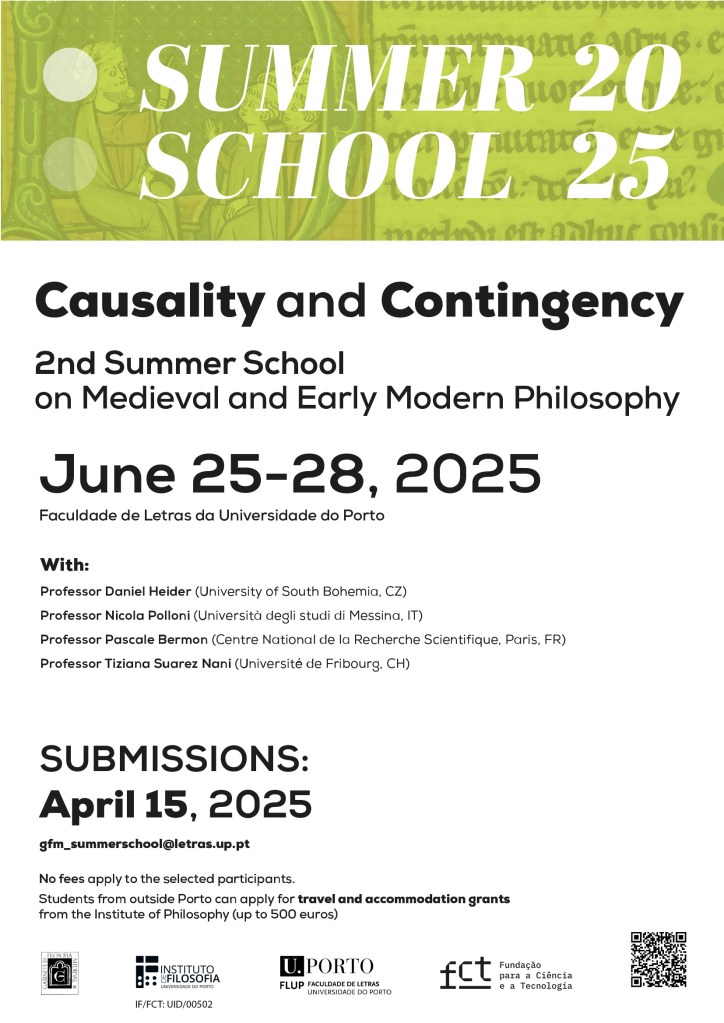
The programme of our Summer School is ready! Readings and lecturers are also ready. And a lot of students have applied from Europe, North America, and Asia. Just a few more days and everything will start (can’t wait!).

Questions concerning the structure of nature, and the structure of our knowledge of the natural world have long occupied philosophers and scientists working in the Western tradition, up until the present day. Especially in the ancient, medieval and early modern periods, Greek, Arabic, and Latin writers have developed a variety of approaches to construct ordered, rule-based frameworks to divide and study nature in all of its complexity.
As a result of enduring interest and continual developments, in both theoretical and practical knowledge of nature, various thinkers from these traditions have introduced novel criticisms to these systems, and others have shown through experiment and observation that long-standing preconceptions about the natural world, and our knowledge of it, do not stand up to scrutiny.
Over the course of one week, this interdisciplinary summer school will provide a conspectus of some of the many historical and modern problems associated with any attempt to formalise boundaries between minerals and other inert substances, plants, animals, and humans. It will also consider how some thinkers pushed the epistemological limits of natural science, attempting to fit new abstract theories and mathematical approaches to the study of the natural world.
“Structuring Nature” brings together a wide range of experts from ancient and medieval philosophy, classical philology, and the history of science, whose research addresses these problems in a number of language traditions, across a wide historical range. These experts will introduce students to the foundational thematic and methodological reflections on the structures of nature from antiquity to early-modern philosophy and science.
By bringing together historians of the scientific and philosophical traditions that have developed on the shores of the Mediterranean Basin, the summer school will provide the students with a unique opportunity to appreciate the historical contingencies of approaches, methods, and perspectives in the human attempts at understanding the structure of nature. In the closing discussions of each day, students will have the opportunity to critically reflect on ways of combining different methods and approaches that may eventually overcome current fragmentations and departmentalisations in the academy.
As of July 28, the summer school will be hosted in Berlin, where the students will benefit from direct access to scholars at the three organising institutions, the Humboldt-Universität zu Berlin, the Freie Universität Berlin, and the Max-Planck-Institut für Wissenschaftsgeschichte.
The Summer School program will officially start two weeks earlier, on Monday, 15 July 2019. At this time, articles and other relevant materials will be circulated to provide the students with the background necessary to take an active part in the activities of the summer school. A final assessment of the students’ progress will be given to their presentations on Friday, 2 August 2019, as well as to their active attendance in all activities offered by the School.
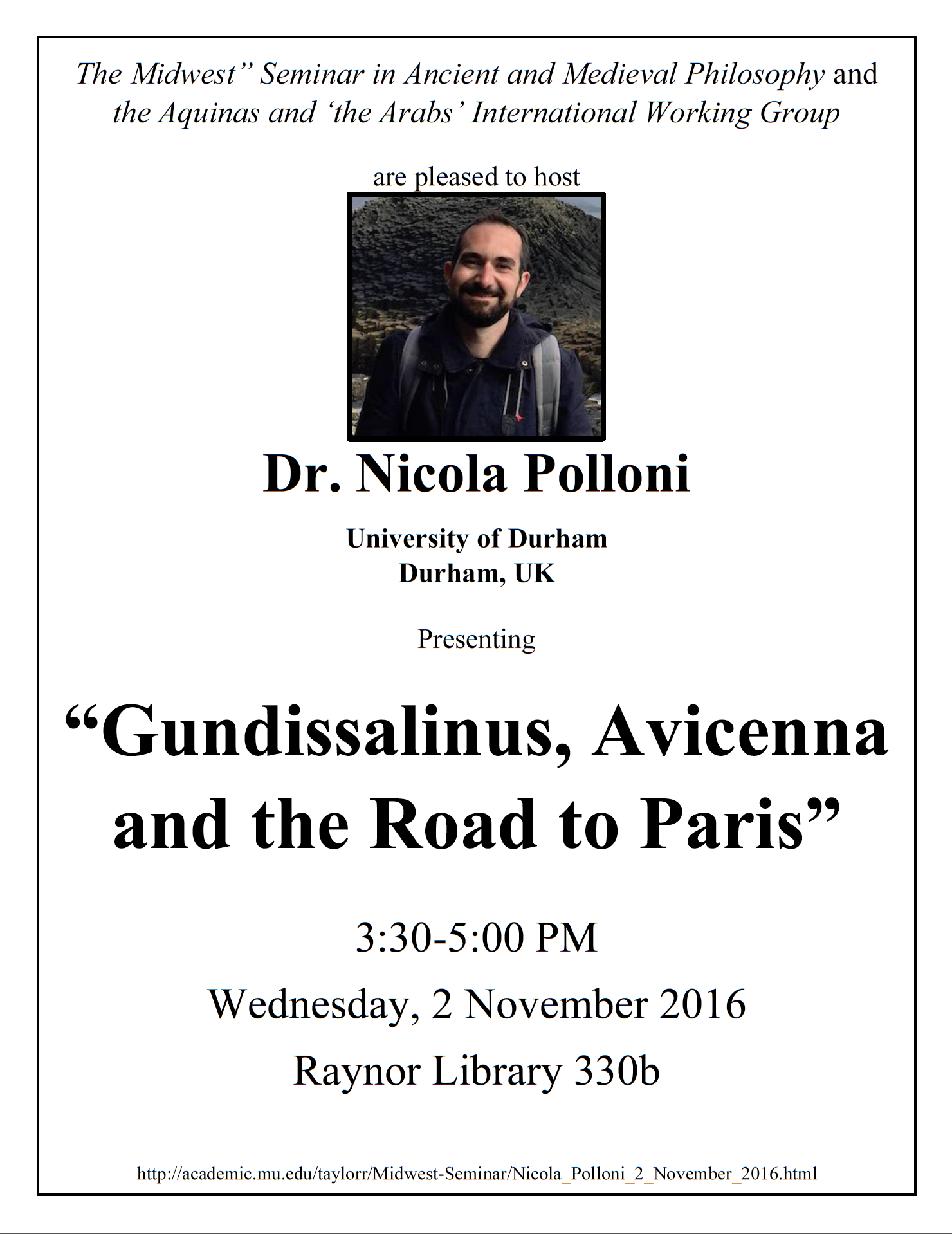
I have been invited to give a lecture at the University of Cordoba. Topic: assimilation of Islamicate knowledge by Latin philosophers and scientists.

Fantastic workshop organised by Jeremiah Hackett at the University of South Carolina. I am honoured and delighted to participate in it!


 potestas essendi