
Cross-Pollinations and Creative Interpolations
The Place of Toledo in the History of European Philosophy
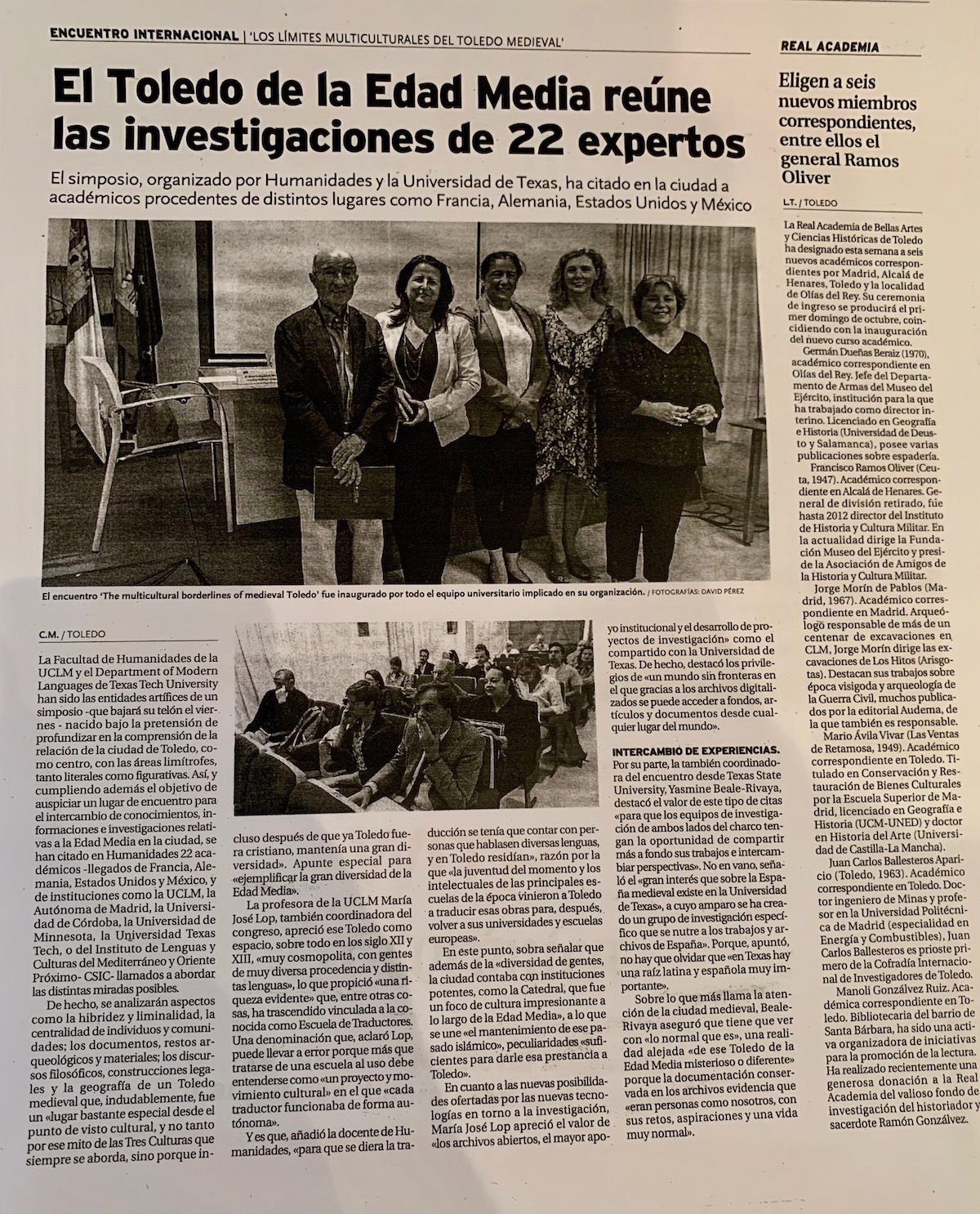
Panel at international conference: The Multi-Ethnic Borderlands of Medieval Toledo: New Directions. Toledo (ES), 5-7 June 2019.
The panel delves into the cross-cultural environment that nurtured Toledo during the Middle Ages and expands into the philosophical outcomes of that unique blending of expertise, cultures, and languages. By focusing on four crucial case studies, the panel touches upon some of the most important theories and authors which, connected to Toledo either directly or indirectly, would profoundly and drastically impact on the European philosophical tradition.
Participants: Vladimir Lasica, Celia López Alcalde, Pedro Mantas España, Nicola Polloni
Programme
Pedro Mantas España, Revisiting Marc of Toledo’s “Transtuli siquidem [librum] Habento[meti] post librum Mofometi”
Marc of Toledo’s Transtuli siquidem [librum] is a peculiar case of medieval cross-pollination of knowledge. Edited by Marie-Thérèse d’Alverny and Gorges Vajda, the text offers meaningful insights into Marc of Toledo’s approach to Ibn Tûmart and his philosophical and theological doctrines. Through an examination of the Latin text of Transtuli siquidem [librum], my paper will analyse the rationale of the doctrinal connections between the intellectual circle of archbishop Ximenez de Rada and Ibn Tûmart’s thought. From this point of view, the originality of Marc’s interpretation of Ibn Tûmart’s speculation will be stressed, together with the intriguing specificities of the Toledan circle of Ximenez de Rada.
Nicola Polloni, Shadows of Gundissalinus in the Thirteenth-Century Philosophical Debate
A translator from Arabic into Latin and an interesting philosopher, Dominicus Gundissalinus (c. 1125 – post 1190) played a pivotal role in renovating central aspects of medieval philosophy. Through his translations, authors like Avicenna and Ibn Gabirol were made available to the Latin audience, providing valuable lenses through which Aristotle’s metaphysics and natural philosophy could be read and understood. At the same time, Gundissalinus’s original philosophical works have disseminated throughout the Central and Later Middle Ages important strategies of doctrinal appropriation of Arabic philosophy—as well as relevant theoretical innovations and peculiar doctrines. My paper explores the intricate history of how Gundissalinus’s thought was received in first decades after his death. In particular, I will expand on the silence apparently surrounding Gundissalinus’s name whereas his works were used, and his theories developed by relevant thirteenth-century thinkers.
Celia López Alcalde, Autoridades árabes y fuentes escondidas en las obras psicológicas de Pedro Hispano
Las obras de psicología atribuidas a Pedro Hispano (c. 1240) son diversas en carácter y en objetivos. La Sententia cum questionibus es un texto universitario, un comentario de texto muy ampliado de la obra aristotélica, que trata sobre qué es el alma y en qué consiste y cómo es posible el conocimiento. La Scientia libri de anima es, en cambio, una obra que, además de tratar de éstas y otras cuestiones, incluye el problema de la vida correcta y de la felicidad del hombre. Ambas obras fundamentan muchos de sus argumentos sobre autores no cristianos, quienes en aquellos años ganan fuerza frente a autores cristianos de la máxima importancia. Nuestra presentación pretende exponer no tanto una relación exhaustiva de las fuentes arábigas traducidas en Toledo en el siglo doce como mostrar de qué modo se justifica el uso de ciertas teorías ajenas a la tradición latino-cristiana; ello en el tratamiento de una cuestión que por su propio objeto, el alma del hombre, se sitúa entre el discurso teológico y el de la filosofía natural.
Vladimir Lasica, The Latin Translation of Avicenna and the Rise of Classical Metaphysics in the Latin West
Under many points of view, Avicenna’s idea of a science whose subject matter is “being qua being” while its leading scientific question is to demonstrate God’s existence represents the rise of classical metaphysics. Probably the first philosopher to systematically develop Aristotle’s problematic idea of prote philosophia, Avicenna played a crucial role in the Latin Middle Ages. His positions profoundly influenced the metaphysical reflections of Thomas Aquinas (1225-1274) and Duns Scotus (1266-1308). Despite many disagreements, both thinkers claimed that metaphysics has to begin from a most general meaning of being and be led by the question about God’s existence. Through them, Avicenna’s stances shaped the rise of what one may correctly call the Western “classic metaphysics”. My talk will focus on the peculiarities of the historical development concerning the formation of medieval Christian metaphysics, and the importance of the Toledo’s School of Translation for spreading Avicenna’s crucial influence. In particular, I will centre my attention on the importance of Avicenna’s metaphysical system and its reception by Christian philosophers in the thirteenth century. This is not only a peculiar case of the transfer of knowledge between Islamic and Christian civilisations, but also a most crucial event for the development of classical metaphysics.
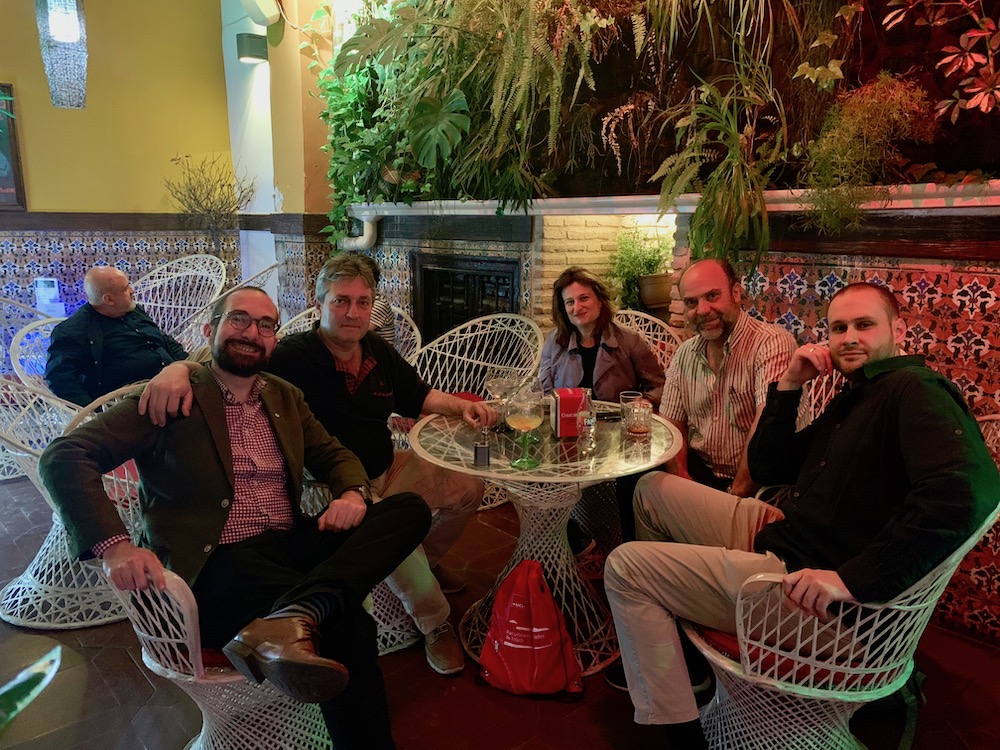
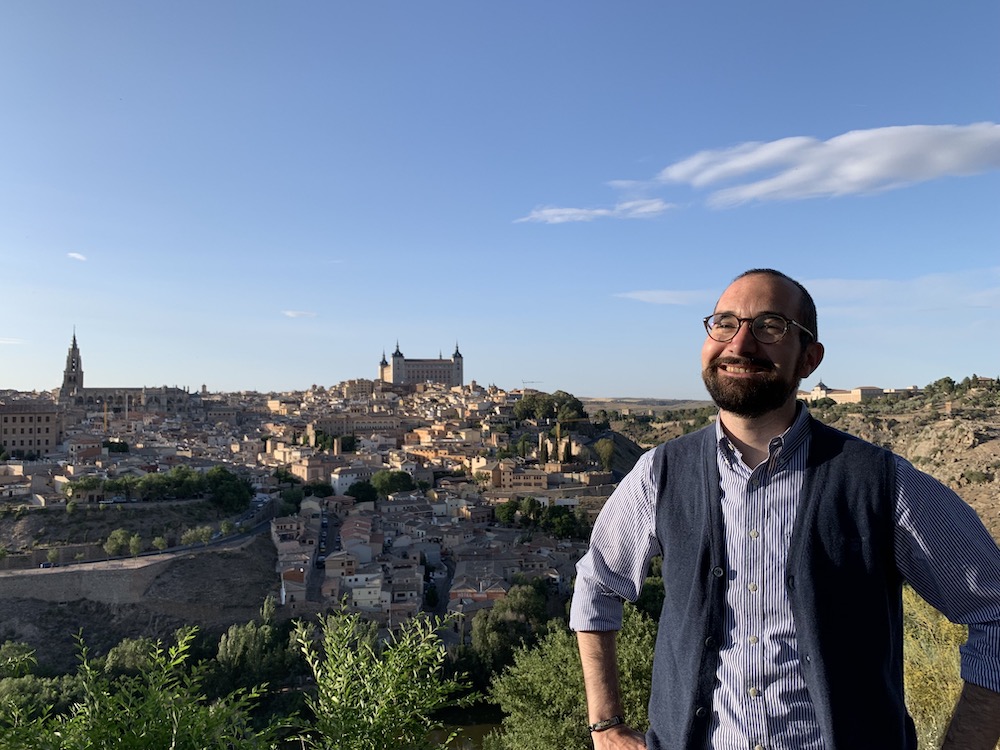
Panel Photos



©️Nicola Polloni | Latest update: July 2019
 Potestas essendi