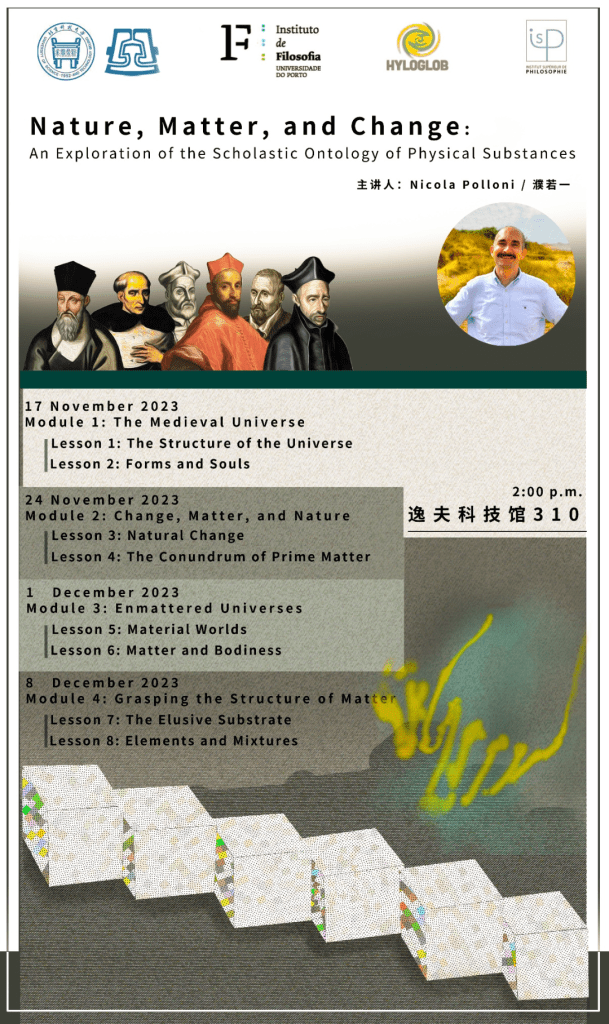
Nature, Matter, and Change
An Exploration of the Scholastic Ontology of Physical Substances
Guest seminar (graduate level) at the University of Science and Technology Beijing (CN). 17 November – 8 December 2023.The seminar delves into scholastic natural philosophy by considering the most fundamental features of the ontological constitution of physical beings as it was envisioned in the European Middle Ages. We will begin with the Aristotelian notion of movement and its application to distinguish between two different realms in the universe: the perfect celestial spheres above the moon and the world below, marked by incessant generations and corruptions. Through the consideration of forms as principles of conservation, organisation, and behaviour of natural substances, we will move on to consider change according to a theory called ‘hylomorphism’, which claimed that all natural beings partake of the same structure of matter and form. This explanatory device allowed medieval philosophers to shed light on how nature works and is structured, but it also originated a series of puzzling implications that gradually problematised their natural philosophy. We will focus on some of these problematic features related to the conceptions of ‘matter’ and ‘materiality’, like the condition of prime matter, its role in the physical constitution of bodies, the epistemological conundrum of its conceivability, and the tensions arising from a hylomorphic consideration of the elements and their mixtures.
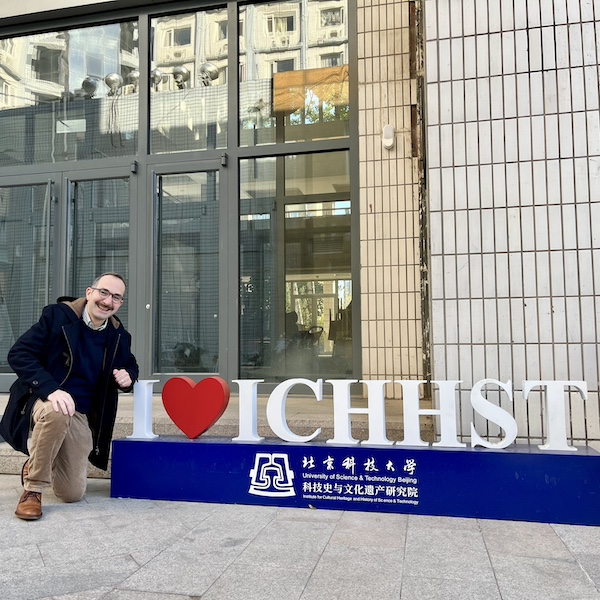
The seminar will take place in person at USTB, on the third floor of the Institute for Cultural Heritage and History of Science and Technology.
Programme
Module 1: The Medieval Universe | 17 November 2023
Lesson 1: The Structure of the Universe
The first class examines how Latin medieval philosophers and scientists envisioned the structure of the universe. I will start by introducing the fundamental distinction between heavens and earth, the latter placed at the centre of the universe and embraced by the former. This basic structure of the universe responds to the different behaviour of the physical constituents that were thought to compose each of these realms. The four earthly elements move rectilinearly and are subject to generation and corruption, while the fifth heavenly element moves circularly and cannot be destroyed naturally. The circular movements of the heavenly spheres, however, causes the natural motions in the earthly spheres below. To understand how this may happen, we will briefly discuss the notions of mover and moved (and the unmoved movers of the spheres) and introduce two crucial couples of metaphysical concepts: (1) substance and accident and (2) act and potency. These two powerful explanatory devices will be central to grasp the ways in which nature works and is ontologically structured according to medieval thinkers.
Lesson 2: Forms and Souls
The second lecture focuses on the two main classes of beings that populate the medieval natural world: living and non-living substances. Items of each class share the same ontological constitution: a natural substance is always a composite of matter and form according to a theory called ‘hylomorphism’. This theory is connected to the explanatory devise usually called ‘the doctrine of the four causes’ (material, formal, efficient, and final causes), which I will introduce concisely. Most of the class will nonetheless centre on the concept of form and formal causation. The form can be considered as the structure or behaving pattern that makes a thing whatsoever what it is. Some forms are rooting elements in the ontological constitution of a thing (the substantial forms), while others do not partake of the same role (the accidental forms). Living and non-living physical substances have both kinds of forms, yet the substantial forms of living beings are somewhat ‘special’: they are the souls, a kind of substantial forms that can preside over the functions of complex organised structures and, in some cases, are able to persist when their matter (the body) perishes.
Module 2: Change, Matter, and Nature | 24 November 2023
Lesson 3: Natural Change
In the previous lecture, we saw how substantial forms work as principles of conservation and organisation of substances. The natural world, however, is marked by constant change. The third lecture dives into the settings of natural change. First, I will introduce the four main types of change introduced by Aristotle: locomotion, alteration, growth and diminution, and generation and corruption. These kinds of change are structured into classes: all aside generation and corruption are cases of accidental change, while the latter corresponds to substantial change. Second, after having introduced this difference, I will shed light on the isomorphism between substantial and accidental change and dissect the ‘ontology of change’ required for them to happen in nature. This will lead us to the three principles of nature introduced by Aristotle in Physics I and the so-called ‘substratum thesis’ claiming that change always needs an underlying subject to happen in nature.
Lesson 4: The Conundrum of Prime Matter
The substratum thesis implies the existence of a rooting, persistent subject of substantial change. Traditionally, medieval philosophers and scientists maintained that this subject is a problematic metaphysical entity called prime matter. In this lecture, I will introduce this entity and explain why it is required by medieval ontology, yet its inclusion bears an element of (almost) irresolvable tension in natural philosophy. Prime matter, indeed, appears to necessarily be both an undetermined potency and something endowed with more physicality at the same time. However, if this entity is a mere possibility of something to exist, how can it be a persisting subject when, for instance, wine becomes vinegar? Yet in turn, if prime matter has some physicality and is able to endure the processes of substantial change, how can it be able to be a metaphysical ingredient of substances and join the forms?
Module 3: Enmattered Universes | 1 December 2023
Lesson 5: Material Worlds
Prime matter, the metaphysical ingredient that is required by scholastic hylomorphism, is a puzzling entity. All natural bodies are made of matter and forms: the latter need prime matter to be instantiated, that is, to exist within the essence of an individual substance. Hence, prime matter can be considered as a sort of mere possibility for forms to exist. A question seems to arise inescapably from this statement: why only the forms of natural bodies should require prime matter? Would it not be more coherent to envision a universe in which all created beings equally partake of prime matter? The fifth class is dedicated to the discussion of this alternative ontology, usually called ‘universal hylomorphism’. As we will see, the attribution of prime matter to spiritual substances like the souls comes with a pervasive set of emendations to the standard hylomorphic account in authors like Roger Bacon. Among them, the most important are (1) the introduction of a new kind of matter, ‘natural matter’, as performing the function of substrate of generation and corruption and (2) the formulation of a pluralist theory of substantial forms claiming that everything in the world has not one but many forms (and, in the case of Bacon, many matters, too).
Lesson 6: Matter and Bodiness
In the previous classes, we have seen that the dual functionality that it was supposed to perform as (1) ontological part of natural substances and (2) substrate of generation and corruption led to the introduction of a varied taxonomy of matters: prime, secondary, proximate, natural, and so on. On this regard, a thorny problem was posited by the relationship between (prime) matter and bodiness. How is it possible that the corporeity of the world originates from something incorporeal and potential like prime matter? And why should we assume that matter is in itself ‘immaterial’, in the sense of lacking all the physicality that it impresses to the substances which it composes? The sixth class will delve into this crucial issue. We will examine the solutions elaborated by four key medieval philosophers: Averroes, Avicenna, Aquinas, and Ockham. As we will see, their theories offer valuable ways to tackle the problem of the emergence of bodiness, yet they all have shortcomings that impact deeply on the hylomorphic conceptualisation of nature.
Module 4: Grasping the Structure of Matter | 8 December 2023
Lesson 7: The Elusive Substrate
As we have seen, the scholastic conception of ‘matter’ originated a series of problematic issues for natural philosophers and metaphysicians willing to explain how nature works. Prime matter, however, was a source of many more puzzling questions. The seventh lecture will centre on one of these puzzles: how can prime matter be grasped by human minds? Lacking all physicality, this entity seems to lie beyond all human cognitive powers. But if prime matter were completely unknowable, natural philosophy would be based on shaky grounds, given the pivotal role played by matter in the course of nature. I will outline and discuss the main epistemic strategies that have been formulated in order to resolve the conceivability problem of prime matter: analogy, abstraction, and incidental perception. By reconstructing these methods and their implications, we will see that they scarcely manage to resolve the elusiveness of prime matter, as many early modern scientists would point out.
Lesson 8: Elements and Mixtures
In the previous classes, we have dived into the hylomorphic constitution of nature as it was envisioned by medieval natural philosophers. All natural substances share the same hylomorphic composition: they are made of matter and substantial forms, to which further accidental forms are attached. The final class will take one step further and engage with another level of physical compositions in terms of elements and mixtures. According to scholastic natural philosophy, all natural bodies are made of continuous, homogeneous bodies like flesh, metal, and blood. These are called mixtures and are originated by the combination of the four elements (fire, air, water, and earth) and their qualities (heat, coldness, moistness, and dryness). Concerning this aspect of physical constitution, medieval scholasticism faced a difficult problem: how can the passage from the elements to the mixture be explained in hylomorphic terms? How can the elemental qualities persist in the mixture when their elements (their substances of which they are accidents) are destroyed?
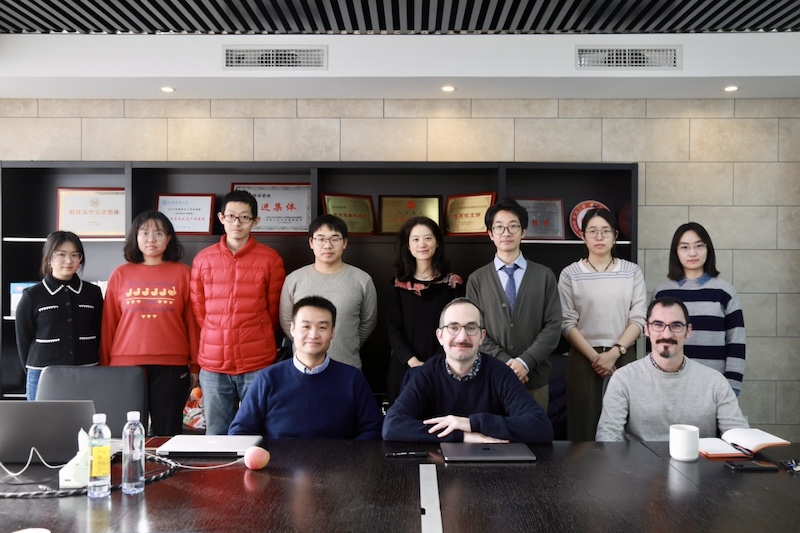
Seminar Photo


©️Nicola Polloni | Latest update: December 2023
 Potestas essendi