Structuring Nature
An Interdisciplinary and Intercultural Summer School
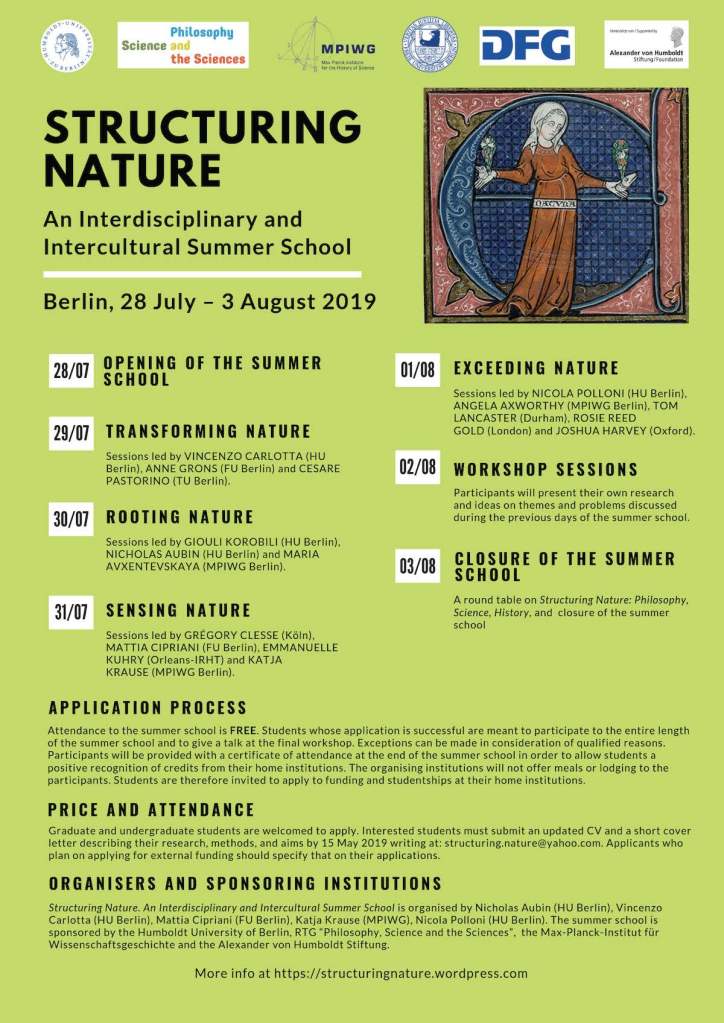
Summer School, HU Berlin, FU Berlin, MPIWG Berlin (DE). From 28 July to 3 August 2019, with preliminary readings starting on 15 July 2019.
Does the structure of nature inform the structure of our knowledge of nature, or do our own (artificial) divisions of science affect the way in which we divide the natural world? Questions concerning the structure of nature, and the structure of our knowledge of the natural world have long occupied philosophers and scientists working in the Western tradition, up until the present day. Especially in the ancient, medieval and early modern periods, Greek, Arabic, and Latin writers have developed a variety of approaches to construct ordered, rule-based frameworks to divide and study nature in all of its complexity. As a result of enduring interest and continual developments, in both theoretical and practical knowledge of nature, various thinkers from these traditions have introduced novel criticisms to these systems, and others have shown through experiment and observation that long-standing preconceptions about the natural world, and our knowledge of it, do not stand up to scrutiny.
Over the course of one week, this interdisciplinary summer school will provide a conspectus of some of the many historical and modern problems associated with any attempt to formalise boundaries between minerals and other inert substances, plants, animals, and humans. It will also consider how some thinkers pushed the epistemological limits of natural science, attempting to fit new abstract theories and mathematical approaches to the study of the natural world. “Structuring Nature” brings together a wide range of experts from ancient and medieval philosophy, classical philology, and the history of science, whose research addresses these problems in a number of language traditions, across a wide historical range. These experts will introduce students to the foundational thematic and methodological reflections on the structures of nature from antiquity to early-modern philosophy and science. By bringing together historians of the scientific and philosophical traditions that have developed on the shores of the Mediterranean Basin, the summer school will provide the students with a unique opportunity to appreciate the historical contingencies of approaches, methods, and perspectives in the human attempts at understanding the structure of nature. In the closing discussions of each day, students will have the opportunity to critically reflect on ways of combining different methods and approaches that may eventually overcome current fragmentations and departmentalisations in the academy.
As of July 28, the summer school will be hosted in Berlin, where the students will benefit from direct access to scholars at the three organising institutions, the Humboldt-Universität zu Berlin, the Freie Universität Berlin, and the Max Planck Institut for the History of Science. The Summer School program will officially start two weeks earlier, on Monday, 15 July 2019. At this time, articles and other relevant materials will be circulated to provide the students with the background necessary to take an active part in the activities of the summer school. A final assessment of the students’ progress will be given to their presentations on Friday, 2 August 2019, as well as to their active attendance in all activities offered by the School.
Organisers: Nicholas Aubin (HU Berlin), Vincenzo Carlotta (HU Berlin), Mattia Cipriani (FU Berlin), Katja Krause (MPIWG), Nicola Polloni (HU Berlin).
Sponsoring Institution: Humboldt University of Berlin, RTG “Philosophy, Science and the Sciences”, Max Planck Institut for the History of Science, and Alexander von Humboldt Foundation.
Instructors: Nicholas Aubin (HU Berlin), Maria Avxentevskaya (MPIWG Berlin), Angela Axworthy (MPIWG Berlin), Vincenzo Carlotta (HU Berlin), Grégory Clesse (University of Cologne), Mattia Cipriani (FU Berlin), Anne Grons (FU Berlin), Yehuda Halper (Bar Ilan University), Joshua Harvey (University of Oxford), Giouli Korobili (HU Berlin), Katja Krause (MPIWG Berlin), Emmanuelle Kuhry (University of Orleans-IRHT), Tom Lancaster (University of Durham), Robert Middeke-Conlin (MPIWG Berlin), Cesare Pastorino (TU Berlin), Nicola Polloni (HU Berlin), Rosie Reed Gold (London).
Participating Students: Gracija Atanasovska (Potsdam), Luca Beisel (Tel Aviv), Salvatore Carannante (Pisa), Jordan Cohen (University of California), Dominic Dold (MPIWG Berlin), Viktoriia Dremova (Central European University), Larissa Gniffke (HU Berlin), Niklaas Görsch (Lübeck), Anna Heitger (FU Berlin), Thomas Henderson (Durham), Niek Kerssies (Nijmegen), Hyejin Kim (Halle-Wittenberg), Alina Therese Lettner (Kassel), Gerd Micheluzzi (Vienna), Eileen Morgan (Notre Dame), Claire Sabel (University Of Pennsylvania), Thomas Seissl (Vienna), Verity Walsh (Stanford), Haydar Altug Yildirim (Fu Berlin), Wenrui Zhao (Columbia).
Application process
Graduate and undergraduate students are welcomed to apply. Interested students must submit an updated CV and a short cover letter describing their research, methods, and aims by 15 May 2019 at the following email address: structuring.nature@yahoo.com. Applicants who plan on applying for external funding should specify that on their applications.
Attendance to the summer school is free. Students whose application is successful are meant to participate to the entire length of the summer school and to give a talk at the final workshop. Exceptions can be made in consideration of qualified reasons. Participants will be provided with a certificate of attendance (or, upon request, any other paper certifying her/his attendance) at the end of the summer school in order to allow students a positive recognition of credits from their home institutions.
Please note that the organising institution will not offer meals or lodging to the participants. Students are therefore invited to apply to funding and studentships at their home institutions.
Participants will be updated about changes to the programme via email, but they are also invited to consult the summer school webpage at the following link: https://structuringnature.wordpress.com
For any further question, you can reach the organisers at the following email address: structuring.nature@yahoo.com.
Programme
The Summer School starts on July 28 with an opening event followed by four days thematically articulated in which the main topics of the premodern encounter with nature will be discussed from a plurality of methodological and disciplinary points of view. The last two days of the Summer School will be dedicated to the students’ workshop in which they will present their lines of research and receive valuable feedback from their peers and the instructors.
SUMMER SCHOOL OPENING | 28 July 2019
Venue: Humboldt-Universität zu Berlin, Topoi Building Mitte, Hannoversche Straße 6, Berlin. Room 1.03.
16.30-17.15: Opening Lecture by YEHUDA HALPER (Bar Ilan), “Nature and the Study of Nature among Aristotelians”
17.30-19.30: General Introduction to the Summer School: Organisers, speakers, and participants introducing themselves and their research.
TRANSFORMING NATURE | 29 July 2019
On day one, we will consider the never-ending transformations of nature at the basic level of the mineral world. Viewed as inert and static by some, the mineral world has long been regarded as a landscape for biological existence. Nevertheless, stasis and inertia are nothing but the horizon of complex processes of transmutation of elements, metals, minerals and stones. Premodern alchemists engaged with intricate procedures and theoretical justifications to produce and perfect stones and metals. But stone is also the material of the fossilised traces of lost lives which profoundly reshaped the human consideration of themselves and of the history of our planet. Transformations from the mineral to the living and from the living to the mineral are a substantive aspect of our understanding of nature as a complex phenomenon, today as in Premodern times.
Venue: Topoi Building Mitte, Humboldt-Universität zu Berlin, Hannoversche Straße 6, Berlin. Room 1.03.
9.00-10.30: ROBERT MIDDEKE-CONLIN (MPIWG Berlin), “Ancient Chemistry: The aromatics industries of the Old Babylonian period”
11.00-12.30: VINCENZO CARLOTTA (HU Berlin), “Universal Nature and Individual Metallic Natures in Byzantine Alchemy”
12.30-14.00: Lunch Break
14.00-15.30: ANNE GRONS (FU Berlin), “On Minerals and Stones as Ingredients of Coptic Pharmacological Prescriptions”
16.00-17.30: CESARE PASTORINO (TU Berlin), “Studying the Formation of Fossils in the Early Modern Period”
17.30-18.00: Student Discussion
ROOTING NATURE | 30 July 2019
On day two, we will consider a second meaningful process characterising specific regions of natural existence: rooting, the most characteristic feature of plants. From Aristotle to contemporary biology, plants appear as a subject of epistemic approaches that bind theorisation and experimentation together. This intimate link between the theoretical and practical realms can even be viewed as a defining mark of the manifold approaches to plant life in the long history of philosophy and science. Historians of science, philosophy, and medicine will discuss attempts by Greek, Arabic, Latin, and vernacular thinkers and practitioners to determine the kinds of life or soul plants had, to establish analogues and differences with stones and animals, and to ascertain their practical applications particularly in medicine. Is the difference between plants and stones and animals ontological or rather epistemic? How have descriptions of the inner structuring of vegetal life influenced historical considerations of them as the lowest form of life? How did the attempts of structuring nature through the patterns of mind and language influence early modern epistemic scientific practices?
Venues: (morning) Max Planck Institute for the History of Science, Boltzmannstraße 22, 14195 Berlin, Main Conference Room of MPIWG. (afternoon) Freie Universität Berlin, Habelschwerdter Allee 45, Berlin. Philological Library Building. Room KL 32/102.
9.00-10.30: GIOULI KOROBILI (HU Berlin), “Botany and Entomology in Greco-Roman Antiquity”
11.00-12.30: NICHOLAS AUBIN (HU Berlin), “A tenth-century Islamic Neoplatonist on the Nobility of the Date Palm”
12.30-14.00: Lunch Break
14.00-15.30: MARIA AVXENTEVSKAYA (MPIWG Berlin), “Rooting of Plants vs. Rooting of Words: Structuring Living Nature through Early Modern Artificial Languages”
15.30-16.30: Student Discussion
SENSING NATURE | 31 July 2019
On day three, we study a third level of the human classification of natural dynamic, sensing. Senses are shared by both animals and humans. While premodern sages thought that animals and humans fundamentally share a physical “animality”, they separated them by a cognitive chasm of “brutes” versus “rationals”. Yet shades of progression from the lowest to the highest level of animality relied on more than fixed ontologies— the principle of “nature does nothing in jumps” at its forefront. We will survey views that various premodern traditions entertained about animals and their distinctions from plants and humans, and we will analyse attempts at classifying animals based on the different criteria of physiological characteristics, the possession or non-possession of certain faculties, and the display of a range of activities or behaviours. Our discussions will reveal how the boundaries between animality and humanity were as profound in their perception as they were shady in their concrete definitions.
Venue: Max Planck Institute for the History of Science, Boltzmannstraße 22, 14195 Berlin, seminar room of Department 2, R.215
9.00-10.30: GRÉGORY CLESSE (Köln), “Animals with Human Skills: Translating and Commenting Aristotle in the Middle Ages”
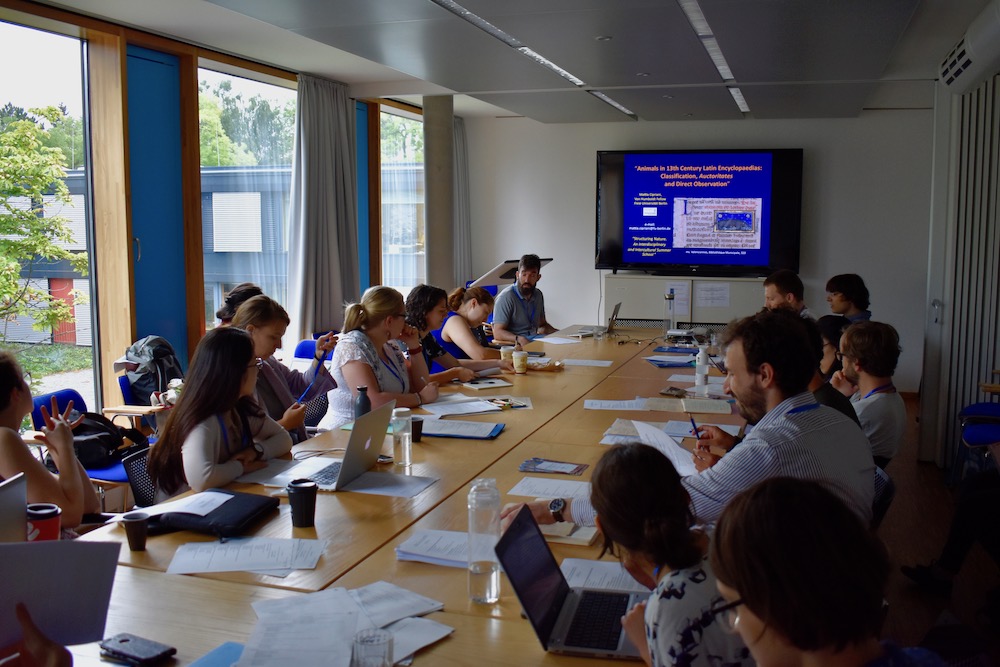
11.00-12.30: MATTIA CIPRIANI (FU Berlin), “Animals in 13th Century Latin Encyclopaedias: Classification, auctoritates and Direct Observation”
12.30-14.00: Lunch Break
14.00-15.30: EMMANUELLE KUHRY (Orleans-IRHT), “The Physiologus and Its Medieval Heritage: From Christian Moralised Bestiary to Natural Philosophy Source”
16.00-17.30: KATJA KRAUSE (MPIWG Berlin), “Conceptualising Experience in the Medieval Sciences of Animals”
17.30-18.30: Student Discussion
Exceeding NATURE | 1 August 2019
Day four will be dedicated to a final process of the human understanding of nature, its “exceeding”. Since the beginning of human speculation, nature provided human beings with a mirror in which they could reflect their own mental existence. Classifications, descriptions, practices, and manipulations implied the formulation of abstracted theories that required a detachment from nature itself. This is the case of central metaphysical assumptions questioning the structure of nature, like the existence of a prime matter. But this detachment was also implied by the necessity to abstract nature into a mathematised world in which its laws could be expressed and understood and by the contemporary inquiry on the most fundamental aspects of physical reality, unperceivable by senses yet understandable through scientific reasoning and calculation. This exceeding nature of the human mind is also reflected and applied on itself whence an object is absent or lost. The artistic approach to the presence of absences in nature and understanding will close our survey on processes and dynamics of human comprehension of the natural world.
Venue: Topoi Building Mitte, Humboldt-Universität zu Berlin, Hannoversche Straße 6, Berlin. Room 1.03.
9.00-10.30: NICOLA POLLONI (HU Berlin), “Premodern Epistemologies of Matter”
11.00-12.30: ANGELA AXWORTHY (MPIWG Berlin), “The Geometrisation of the Heavens in Pre- and Early Modern Europe”
12.30-14.00: Lunch Break
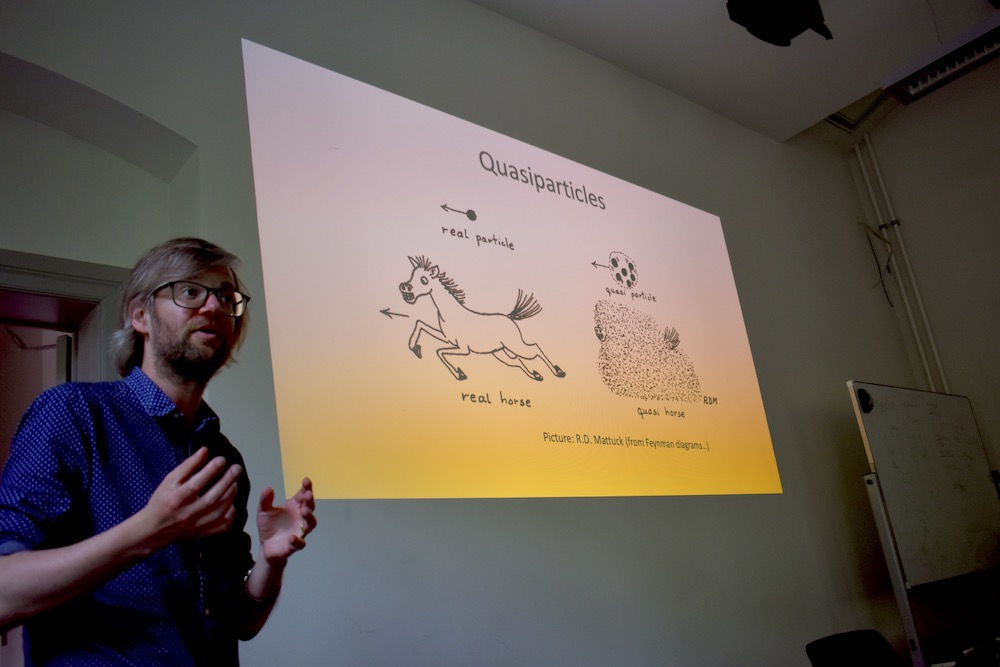
14.00-15.30: TOM LANCASTER (Durham), “Physical Matter: From the Large Scale Structure of Spacetime to the Quantum Structure of Elementary Particles”
16.00-17.30: ROSIE REED GOLD (London) and JOSHUA HARVEY (Oxford), “How to See Nothing: An Exploration of Absence in Art and Science and Its Parallels to the Epistemological Pursuit of Prime Matter”
17.30-18.30: Student Discussion
STUDENTS’ WORKSHOP | 2 August 2019
On day five, we will discuss and further problematise topics and approaches presented during the previous days. Students will have the possibility to present their own ideas on themes they are particularly interested in and share their insights on themes discussed during the teaching days of the Summer School.
Venue: Topoi Building Mitte, Humboldt-Universität zu Berlin, Hannoversche Straße 6, Berlin. Rooms 1.03 and 3.03.
Workshop Session 1 (Room 1.03): Natural Problems
9.00-9.20: THOMAS SEISSL (Vienna), “How to Give a Non-circular Definition of Time: Simplicius’ Criticism of Aristotle’s Account of Time and a Possible Way Out”
9.20-9.40: SALVATORE CARANNANTE (Pisa), “The efficient nature. The role of Plotinus in Bruno’s doctrine of natural production (De la causa, II)”
9.40-10.00: VIKTORIIA DREMOVA (Central European University), “The Limits of Description. Spontaneous generation in Early Modern Texts”
10.00-10.20: LUCA BEISEL (Tel Aviv), “Full of Systems as the Universe. Alexander Cozens (1717-1786) and the Procedural Generation of Nature”
10.20-11.00: General Discussion
Workshop Session 2 (Room 1.03): Epistemes of Nature
11.30-11.50: GERD MICHELUZZI (Vienna), “Quasi naturalis iuris? Medieval Cast Shadows between Art and Science”
11.50-12.10: LARISSA GNIFFKE (HU Berlin), “Natural Theology in Thomas Aquinas”
12.10-12.30: CLAIRE SABEL (University of Pennsylvania), “The World and its Furniture: Matter and Method in the Seventeenth Century Earth Sciences”
12.30-12.50: NIKLAAS GÖRSCH (Lübeck), “Joachim Jungius’s View on Nature in the Context of Natural History”
12.50-13.30: General Discussion.
Workshop Session 3 (Room 3.03): Naturalising Perspectives: Animals, Machines, and Us
11.30-11.50: THOMAS HENDERSON (Durham), “Nature, Society and Men – Looking at Gender in Medieval Science?”
11.50-12.10: NIEK KERSSIES (Nijmegen), “Machine Discovery: The Limitations and Possibilities of Machine Learning in the Automation of the Sciences”
12.10-12.30: WENRUI ZHAO (Columbia), “The Investigation of the Eye and Vision in Animals in Early Modern Europe”
12.30-12.50: HAYDAR ALTUG YILDIRIM (FU Berlin), “Creation of a World Picture: Cases of Photoemission Experiments”
12.50-13.30: General Discussion.
Workshop Session 4 (Room 1.03): Animals and Humans
15.00-15.20: EILEEN MORGAN (Notre Dame), “Comme sil estoit vif: Peacocks, Natural Science, and the Edible Art of Altering Nature”
15.20-15.40: VERITY WALSH (Stanford), “Technical nomenclature and/as system building in Pliny’s Naturalis historia: An ancient case study and early modern comparandum”
15.40-16.00: GRACIJA ATANASOVSKA (Potsdam), “Corporeity, Animality, and Language in Maurice Merleau-Ponty and Jakob von Uexküll’s Theories of Nature”
16.00-16.20: HYEJIN KIM (Halle-Wittenberg), “Re-viewing the Concept of Biodiversity and Nature’s Contributions to People”
16.20-16.40: ALINA THERESE LETTNER (Kassel), “The Biosemiotic Thrust of Buddhist Phenomenology”
16.40-17.30: General Discussion
Closure of the Summer School | 3 August 2019
Venue: Topoi Building Mitte, Humboldt-Universität zu Berlin, Hannoversche Straße 6, Berlin. Room 3.03.
Workshop Session 5 (Room 1.03): Structures and Organisation of Knowledge and Nature
9.30-9.50: DOMINIC DOLD (MPIWG), “Levels of organisation in 13th-century science”
9.50-10.10: JORDAN COHEN (University of California), “Knowledge in the Making: The Organization of Philosophical Debates”
10.10-10.30: General Discussion
11.00-12.30: ROUND TABLE: History, Science, and Philosophy: Tensions and Perspectives
12.30: Closure of the Summer School.
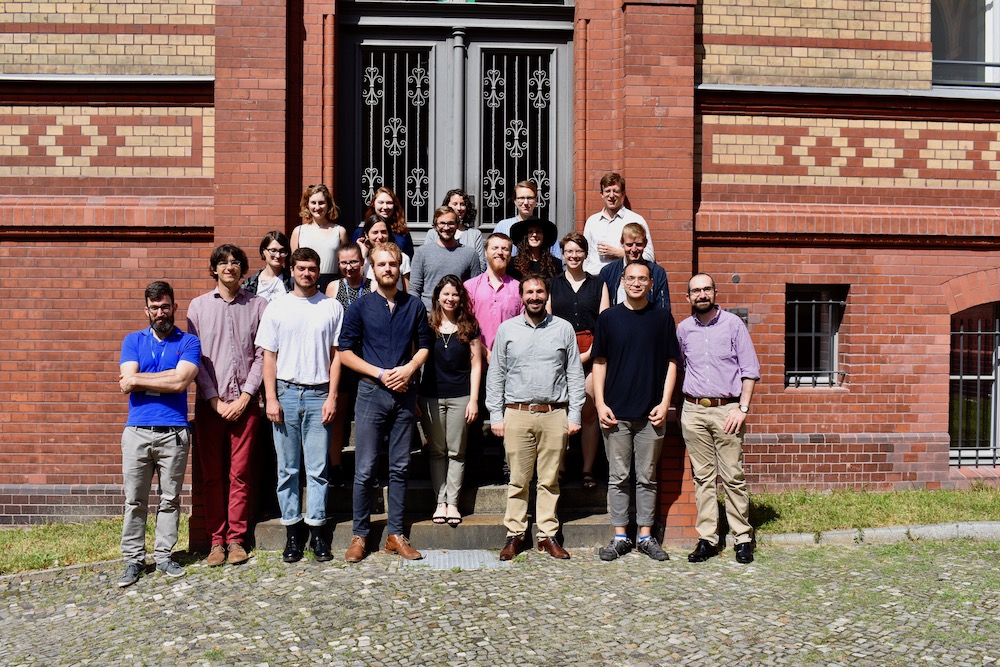
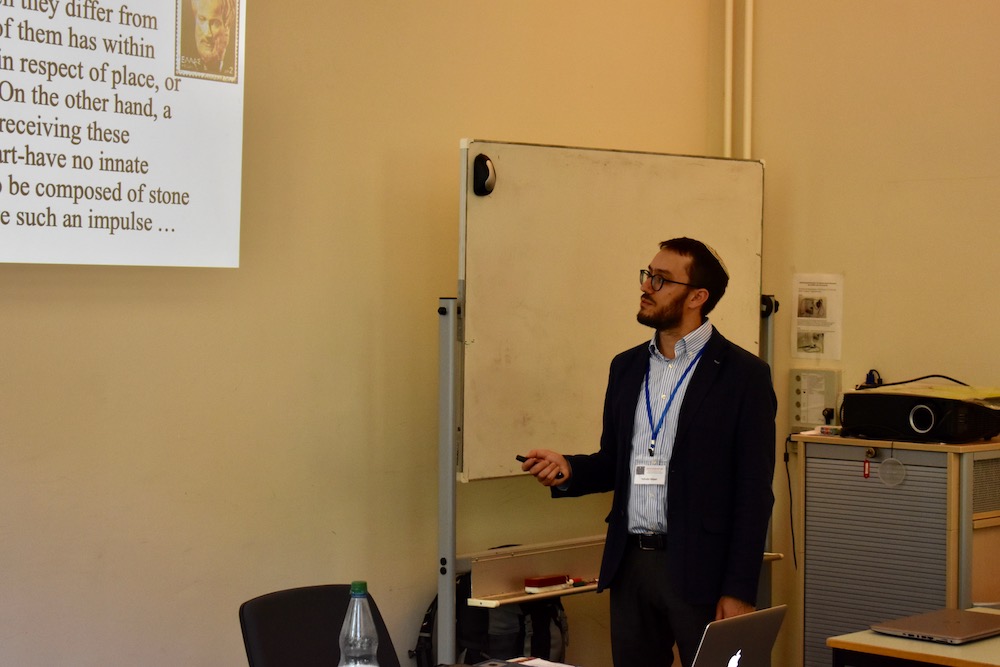
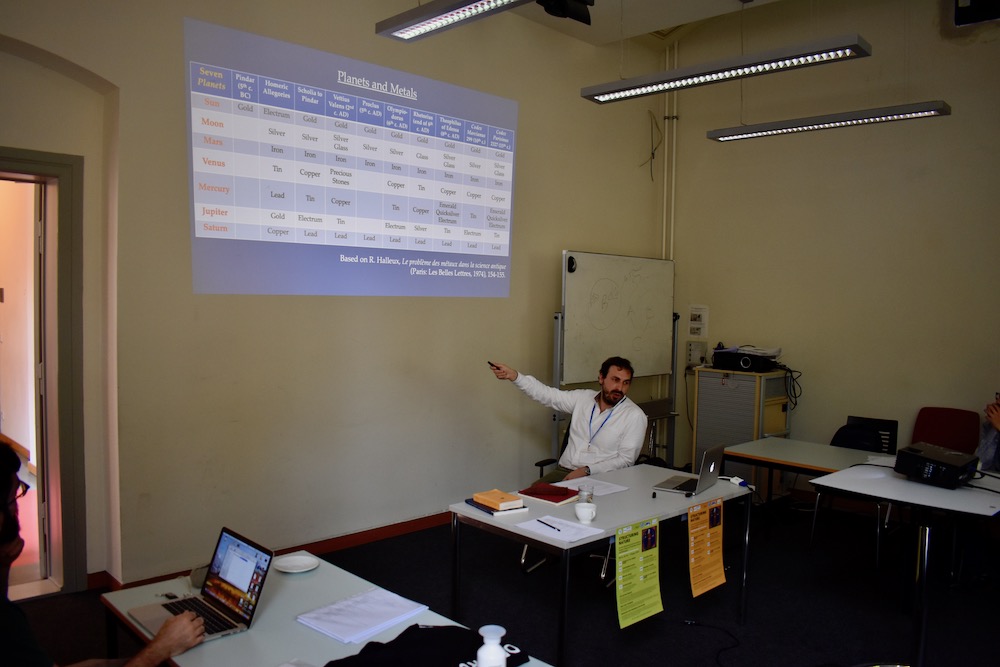
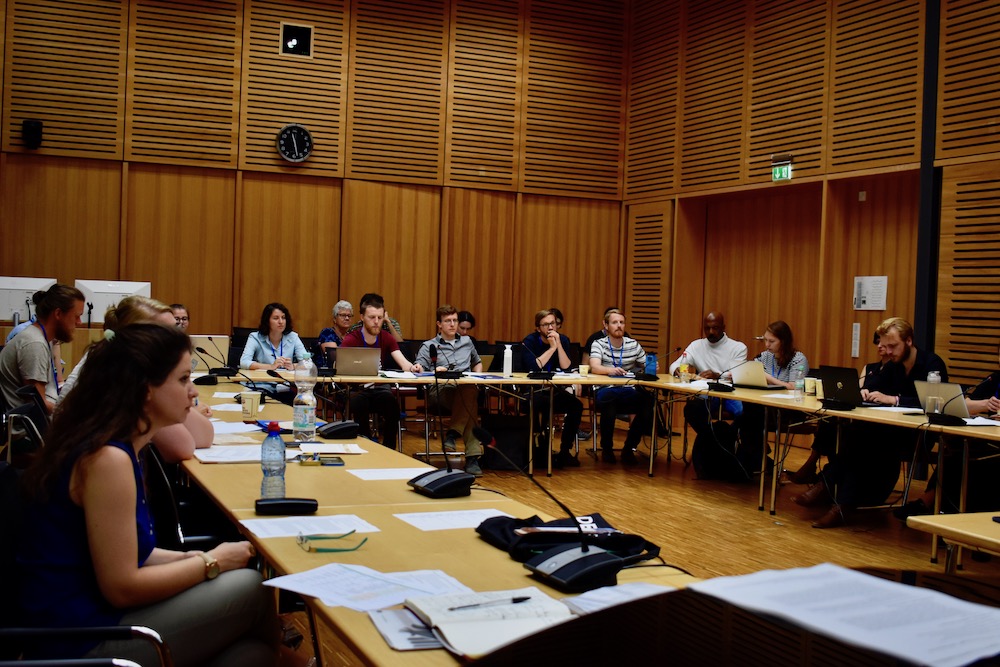
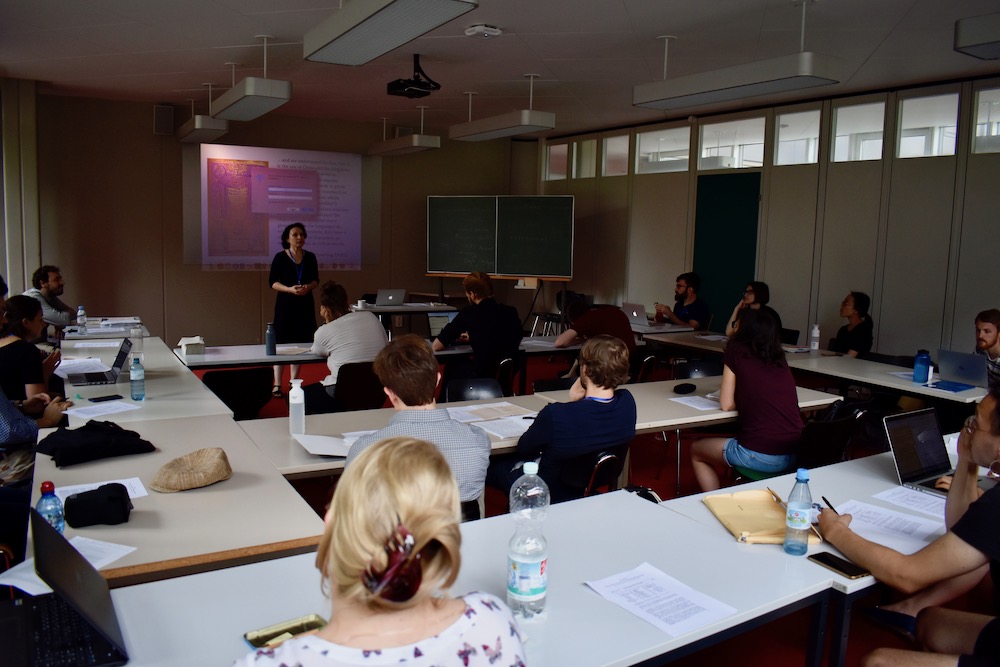
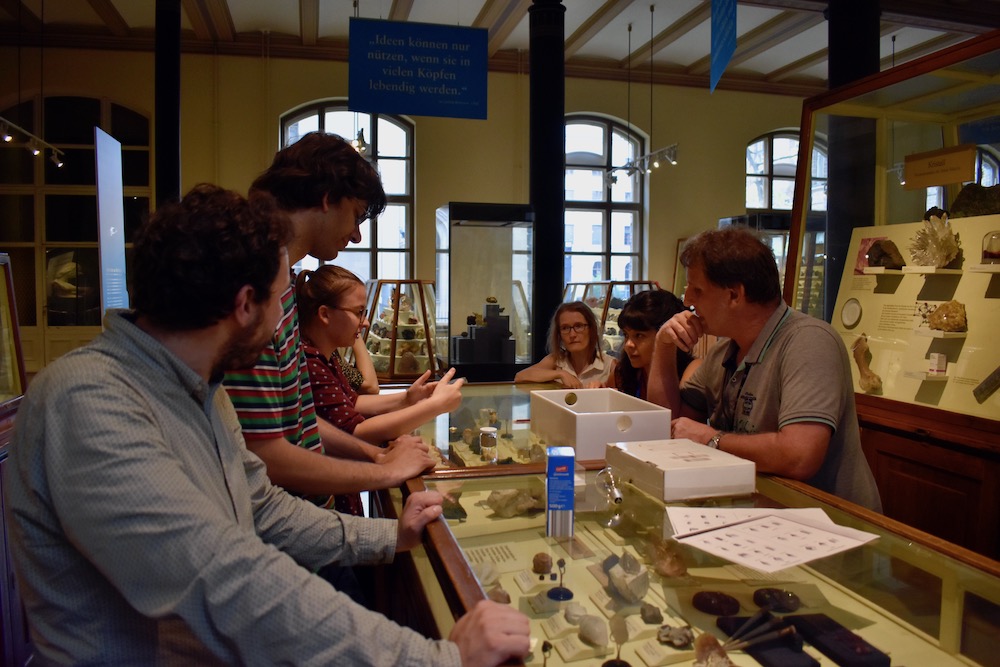
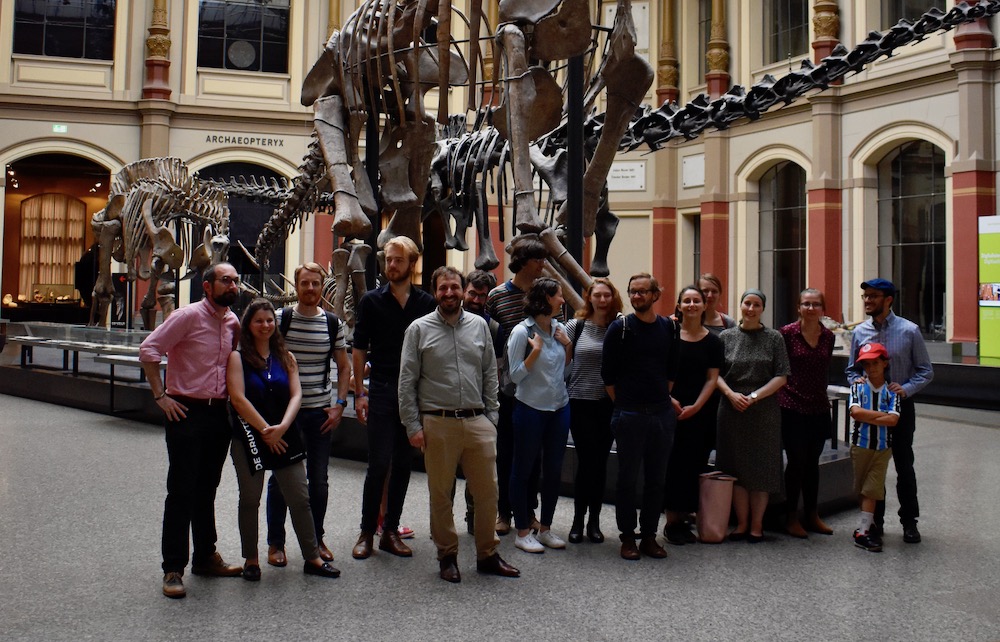
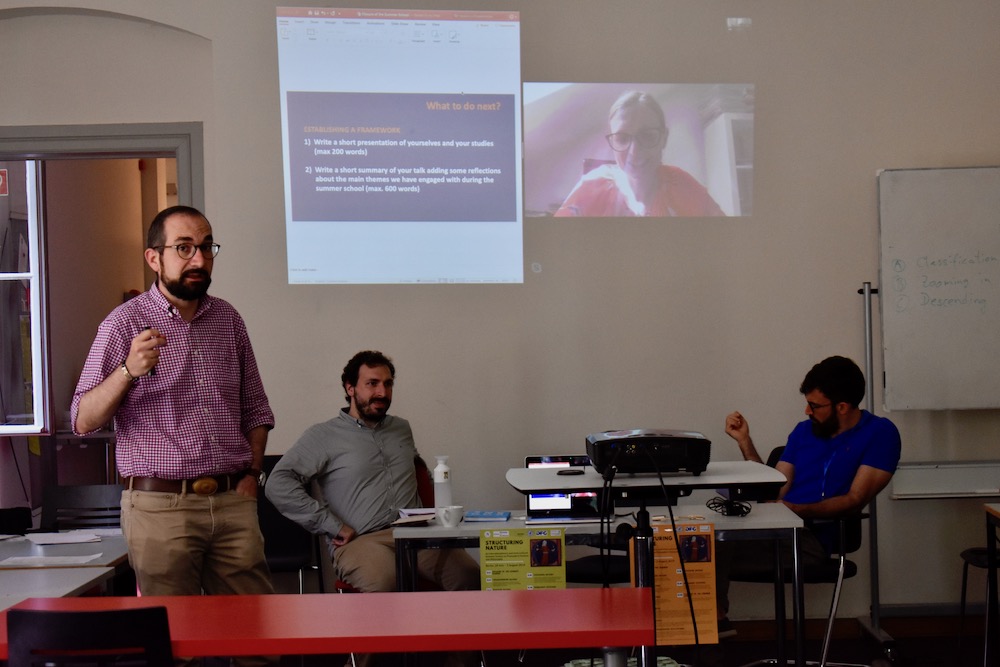
Summer School Photos



©️Nicola Polloni | Latest update: September 2019
 Potestas essendi