

Ancient and Medieval Visions of Light and Colour
Technische Universität Berlin (DE)
Winter Semester 2019
Light and colour
“Because you have seen me, you have believed” (John 20:29). But is seeing always believing? And how is seeing possible at all? Long before John the Evangelist wrote his Gospel around 90 AD, in which doubting Thomas required a verification for believing in Christ’s resurrection, the question of what it means to see, how humans are able to see, and what is required for them to do so has been a central theme across scientific disciplines. Seeing, in premodern times, focused, rather frequently, on questions to do with the qualitative properties of light and color, and the role of the medium that was thought to transmit them to the human eye. In optics, however, explanations on the propagation of light, at times rooted in experimentation, also drew on geometry, thus fostering an early mathematization of the world. In theories of human cognition, considerations on light, color, and the medium were extended beyond their original contexts in order to account for the workings of human sensation, intellectual understanding, and discursive thought. Similarly, a wide range of cosmological and causational models relied on the interplay between light, color, and the medium, often drawing on optical theories, to explain ideas as fundamental as eduction and change. And even in premodern theology, light and color were at the heart of rationalizations, ranging from prophecy to rapture to the vision of God in the afterlife. The purpose of this seminar is to read select sources and secondary literature on seeing, light, and color (in English translation) in order to gain a deeper understanding of the fundamental roles that Premodern Visions of Light and Color had for premodern knowledge.


Programme
Articulation
Block 1 – Light, Vision, and Colour in Theories of Perception and Knowledge
Block 2 – Light, Vision, and Colour in Optical Theories
Block 3 – Light, Vision, and Colour in Cosmology and Theology
Block 4 – Light, Vision, and Colour in Metaphysics and Natural Philosophy
Classes
Monday, 14 October, 15-17.
Friday, 13 December 2019, 9-18.
Saturday, 14 December 2019, 9-18.
Friday, 20 December 2019, 9-16.
Saturday, 21 December 2019, 9-16.
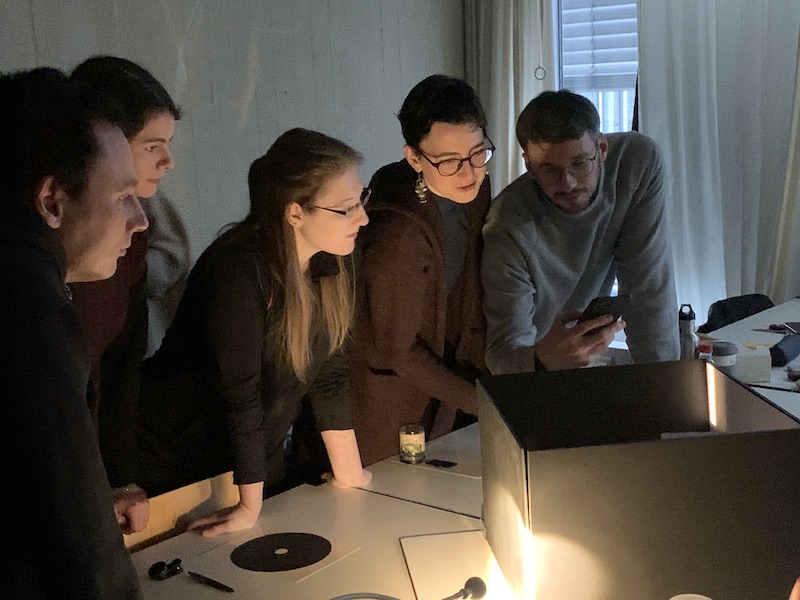
Light Lab
14 December 2019, with Montserrat de Pablo (Universidad de Castilla La Mancha / MPIWG)
 potestas essendi