Nicola Polloni
I am Associate Professor of Medieval Philosophy at the University of Messina, where I study the metaphysical foundations of premodern thought and the development of natural philosophy from the twelfth to the seventeenth century. My research focuses on theories of matter and form, with particular attention to figures such as Dominicus Gundissalinus, Robert Grosseteste, and Roger Bacon, whose reflections on nature and knowledge reshaped the intellectual landscape of medieval Europe. More recently, my work has begun to explore possible resonances between scholastic metaphysics and Chinese philosophy, seeking new ways to understand how different traditions have conceptualised the structure of reality.
Much of my research is guided by a commitment to intellectual connection – bridging traditions, disciplines, and people. I believe that the history of philosophy is most vital when conceived as a living network of exchanges rather than a collection of isolated systems. Through initiatives such as Global Scholasticism and the Routledge series Global Perspectives on the History of Natural Philosophy, I work to bring together scholars from different regions and methodological backgrounds to rediscover the plurality and creativity of the philosophical past.
These collaborations aim not only to expand the geographical and cultural scope of medieval and early modern studies but also to demonstrate how those traditions can speak to some of the most urgent intellectual challenges of the present.
Teaching, for me, is an extension of this same vision. I see the classroom as a laboratory of ideas – a place where curiosity, rigour, and imagination meet. My goal is to help students develop a philosophical sensibility that unites critical precision with intellectual openness, encouraging them to think beyond conventions and to recognise philosophy as a transformative practice. I want my students to become not only interpreters of texts but active participants in a global conversation – individuals capable of rethinking the world with clarity, creativity, and courage.
Academic CV
Discover my academic journey, professional experience, and key achievements detailed in my CV. It highlights my research projects, teaching roles, publications, and collaborations across international institutions. Whether you’re a colleague, recruiter, or collaborator, this comprehensive overview offers insight into my expertise and contributions to the field.
read more
Research
My research explores the complex history of hylomorphism – the theory that all physical entities are composed of matter and form – and its transformation across distinct philosophical traditions during the long Middle Ages. A central focus is the fragmentation of scholastic hylomorphism: the emergence of competing models, new conceptualisations of materiality, and the growing tension between metaphysical universality and physical particularity.
read more
Publications
Publishing the results of one’s research is among the most critical responsibilities of every scholar, as well as one of the most challenging and rewarding aspects of academic life. On this page, you will find a carefully organised chronological compilation of all my academic publications. Following this, there is a separate list of book reviews that I have written over the years, reflecting my engagement with ongoing scholarly conversations.
read more
Teaching
Teaching and research are the two cores of my professional life. Following the disciplinary tradition marking the teaching of the history of philosophy and science, my classes are marked by an intertwining of inductive and deductive strategies. My teaching philosophy is grounded on the principles of active learning and the universal design for learning (UDL), prioritising a multiplicity of means by which students can engage, express, and assess themselves.
read more
Conferences and Meetings
I believe academia is a collective effort, as no one person can fully grasp the complex history of philosophy alone. That’s why meetings are essential – they help us share knowledge, test ideas, and build connections. Here you’ll find a list of conferences, panels, and research meetings I have organised, often in collaboration with friends and colleagues, fostering vibrant scholarly exchange and collaboration.
read more
Lectures and talks
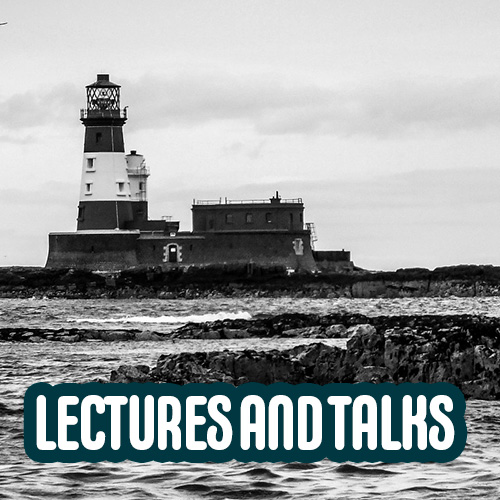
Academia is a collaborative endeavour that thrives on encountering new perspectives and having one’s interpretations challenged. This is why academic meetings and conferences are key to our profession – and I love them! Here, you will find a list of all the talks I have delivered throughout my career, along with their abstracts. I am sincerely grateful to the dozens (hundreds?) of colleagues and friends who have provided invaluable feedback during these gatherings.
read more
Looking Beyond
Life is a complex tapestry that cannot and should not be confined to one’s professional sphere. At times, particularly during the arduous phase of postdoctoral wandering, professional and personal lives collide, making it nearly impossible to achieve balance. Yet, there are moments when personal life strikes back, intertwining with academia in remarkable ways. Below, you will find some examples that reflect these meaningful (and occasionally challenging) intersections in my life.
Mapping the journey
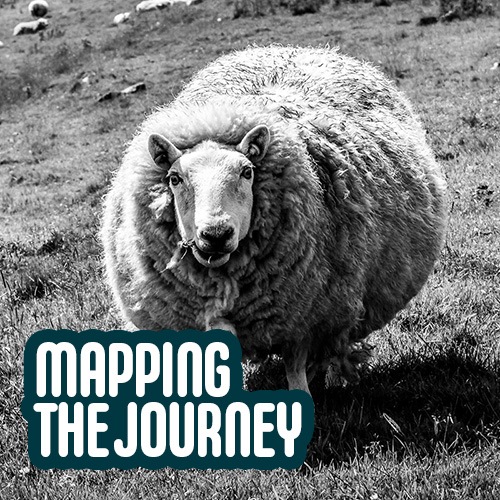
Academia led me to beautiful places, fascinating people, bizarre experiences, and many good friends. Instead of keeping all this out of the spotlight, I decided to preserve the memories of all wild days of academia well aware that any one of them, in direct or obliquitous way, has uniquely contributed to my journey and to making me a better scholar and a better person. My gratitude to all friends who, without knowing it, appear in this section.
read more
HYLONICUM
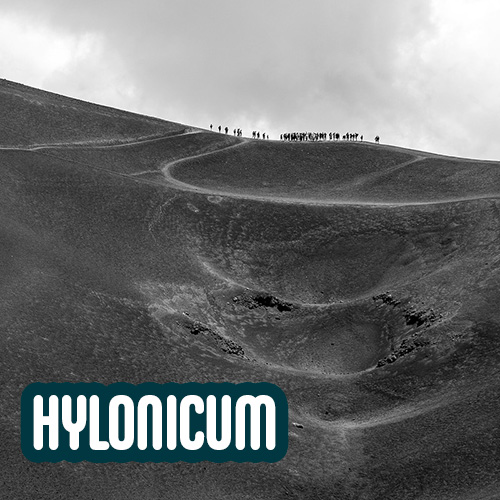
Photography, for me, is not an escape from thinking, but another, subtler and apophatic, yet equally necessary, way of thinking. I am a scholar by profession. I work on premodern systems of thought, on matter and form, on the long and entangled histories of ideas across distinct cultures. My academic work engages structures, ontologies, and the conditions under which something can be said to be. Photography continues that same inquiry, but in light rather than in concepts.
read more
©️Nicola Polloni | Latest update: March 2026
 Potestas essendi